I run a commercial cannabis facility in Michigan. Like most growers, I used to keep track of everything in my head, a spreadsheet, or a notebook that was never where I needed it.
Last week I started asking my cultivation software questions instead. Here’s what happened.
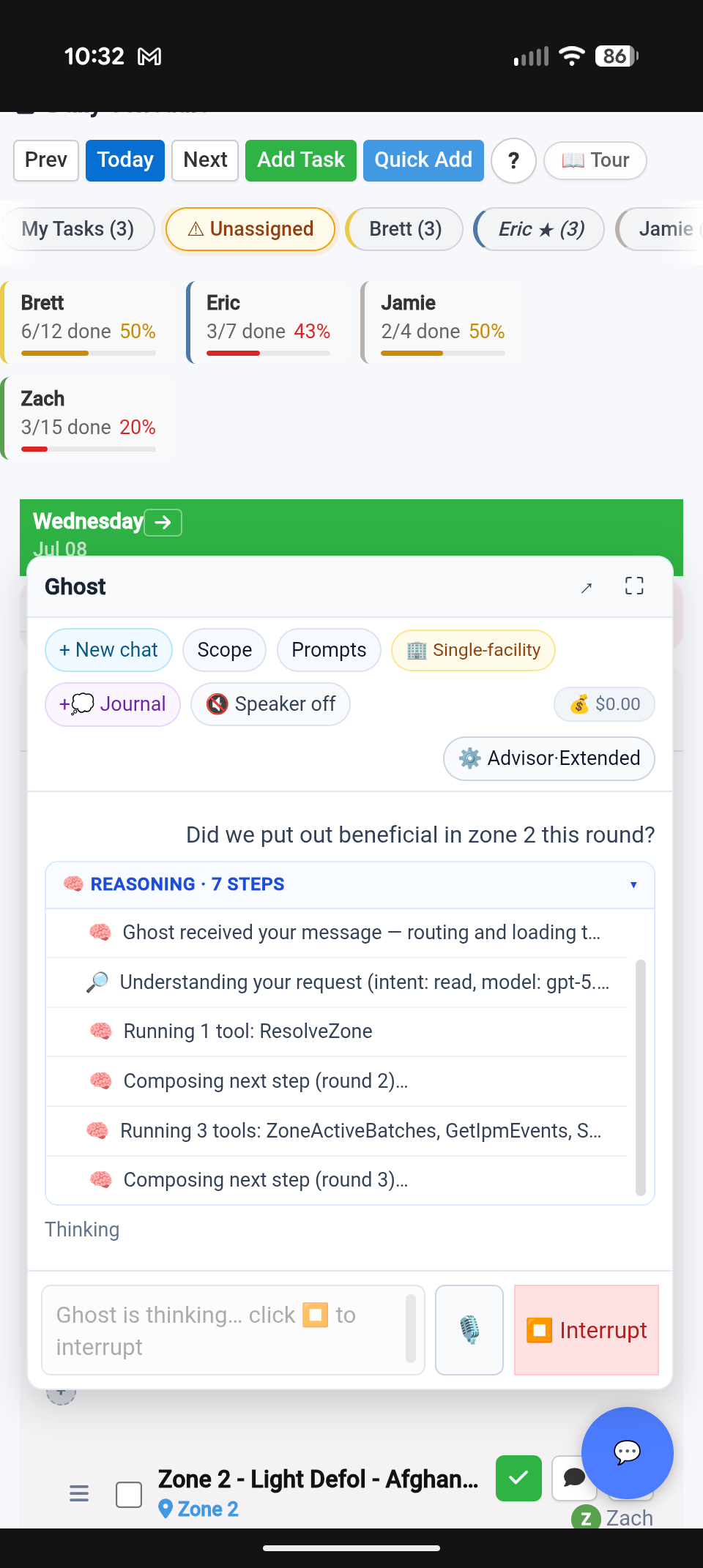
Question 1: “Did we put out beneficial insects in Zone 2 this round?”
I was standing in my grow room on my phone. Couldn’t remember if the bug release happened. Instead of walking back to a clipboard, opening a spreadsheet, or texting my team member who might not even be around, I just asked.
In about 10 seconds, it pulled up the exact date (June 24th), the exact species (swirskii mites and andersoni sachets), which batches it applied to (Super Boof and Afghan Kush, both on flower day 35), and even quoted my own grow journal note back to me.
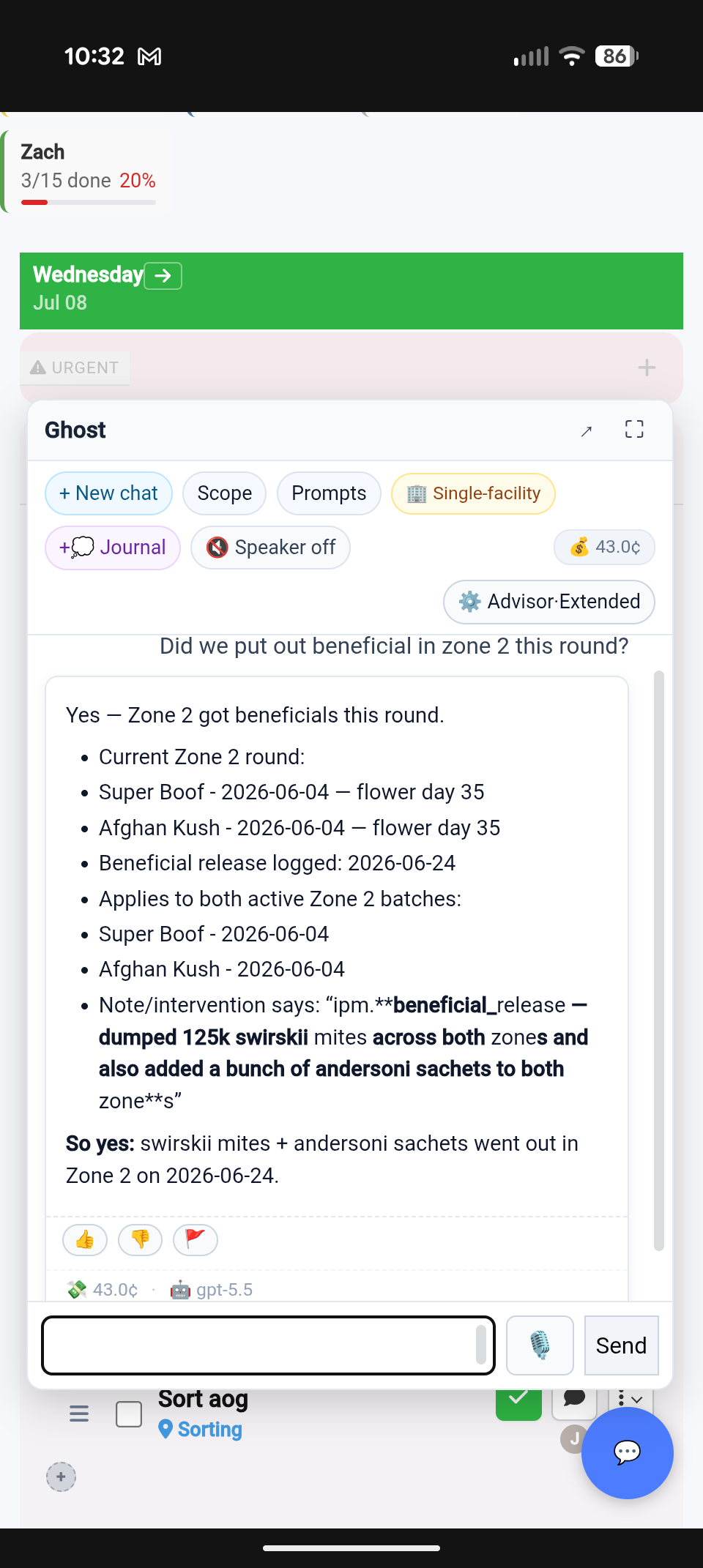
Cost: $0.43
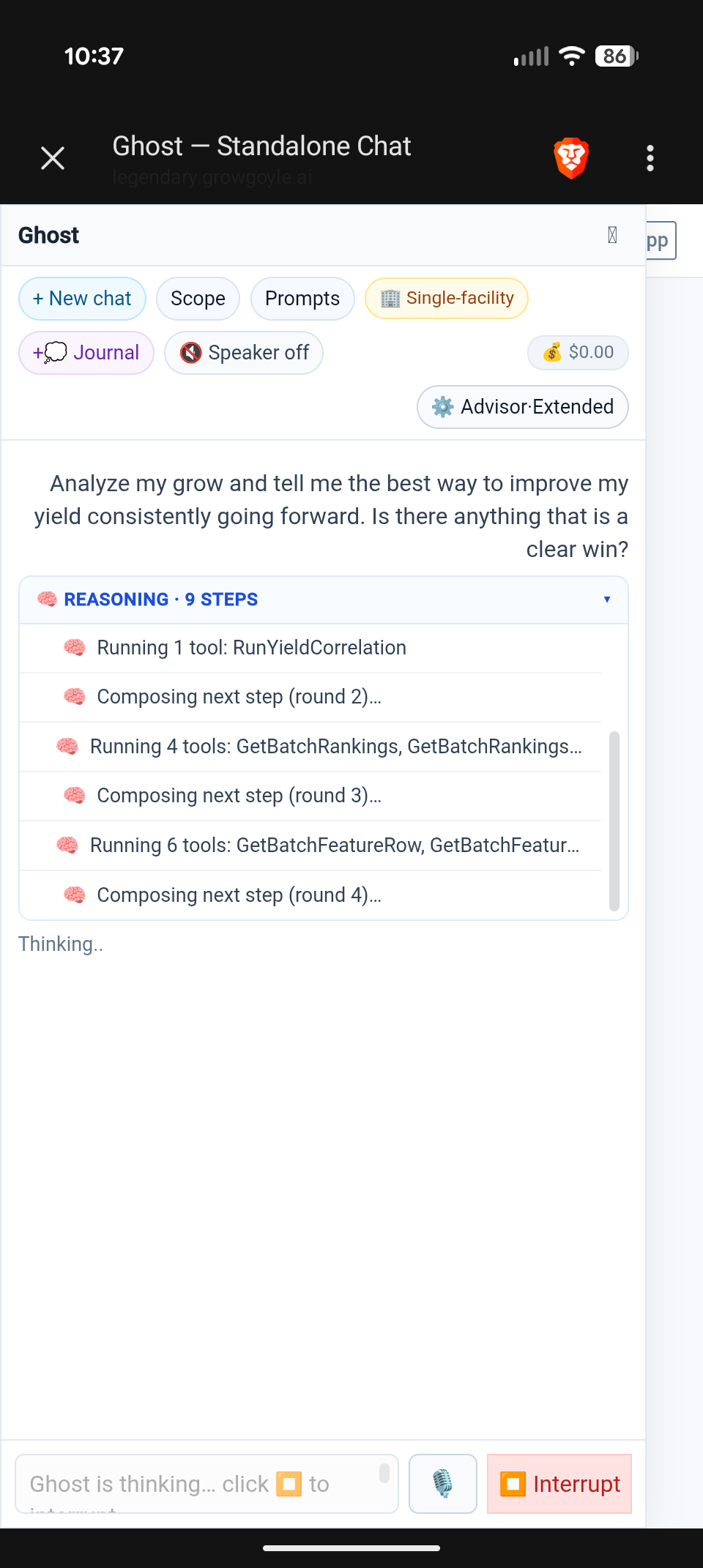
Question 2: “Analyze my grow and tell me the best way to improve my yield consistently.”
This is the one that got me.
The software ran correlations across my actual batch data. Compared my best runs to my worst. Looked at environmental conditions, irrigation patterns, EC levels, everything I’d been logging. Then it came back with a specific answer:
“Stop treating light as the first yield lever. Treat irrigation throughput and pore EC control as the first lever.”
It showed me that my best-performing batches were high-water-movement crops with controlled night recovery. Not the ones under the most light. That’s a specific lead from my own records, not generic advice from a blog post. It gives me something to check and test; a correlation across runs does not prove irrigation caused the whole difference.
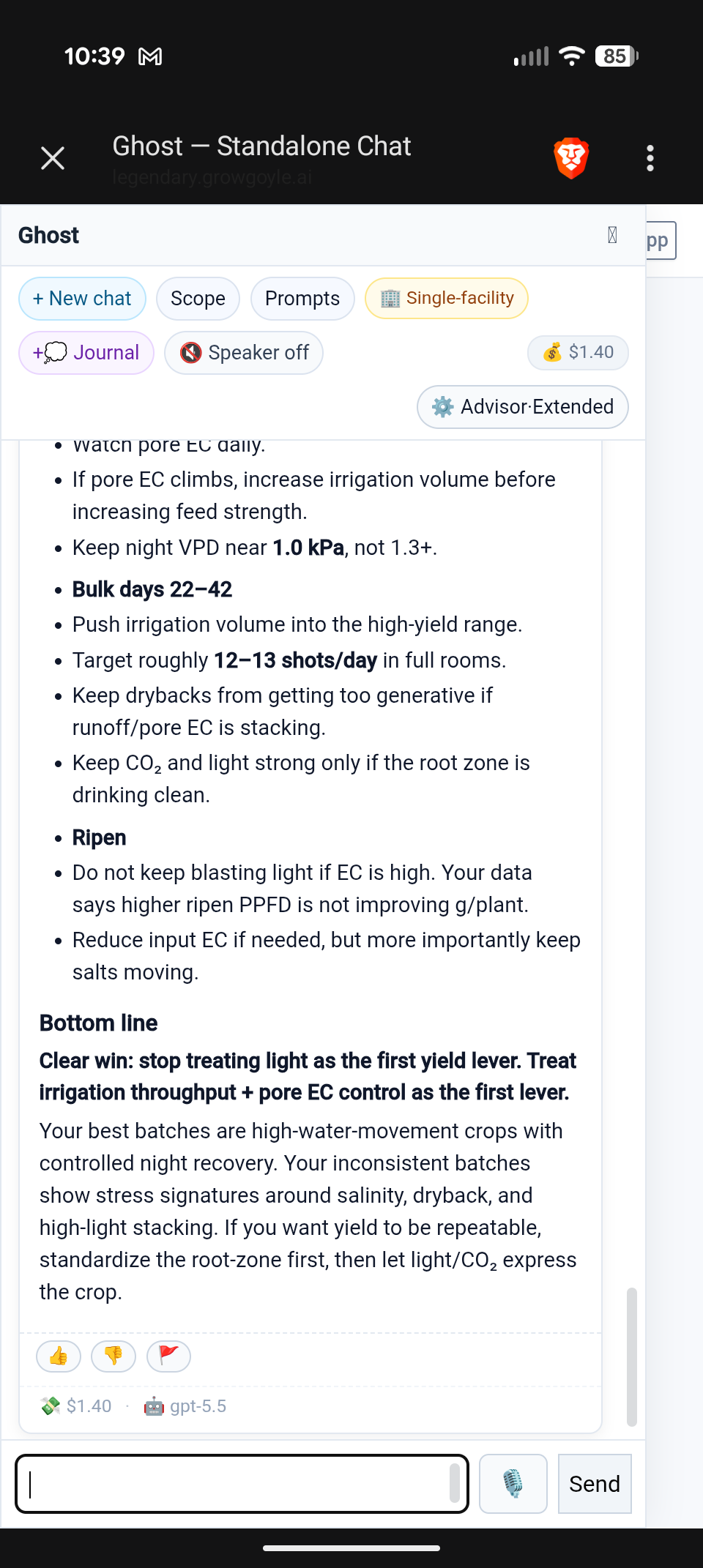
Cost: $1.40
A cultivation consultant would charge $100-150/hr for this kind of batch analysis. Most growers just never do it. They run the next batch and hope it goes better.
Question 3: “Plan the schedule for the next two weeks.”
I told it to look at every zone, every batch, every flower day, and build me a two-week activity plan.
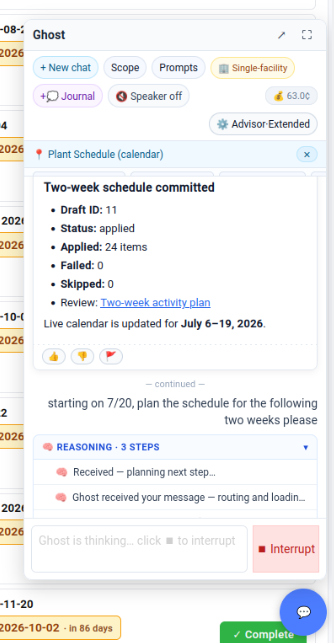
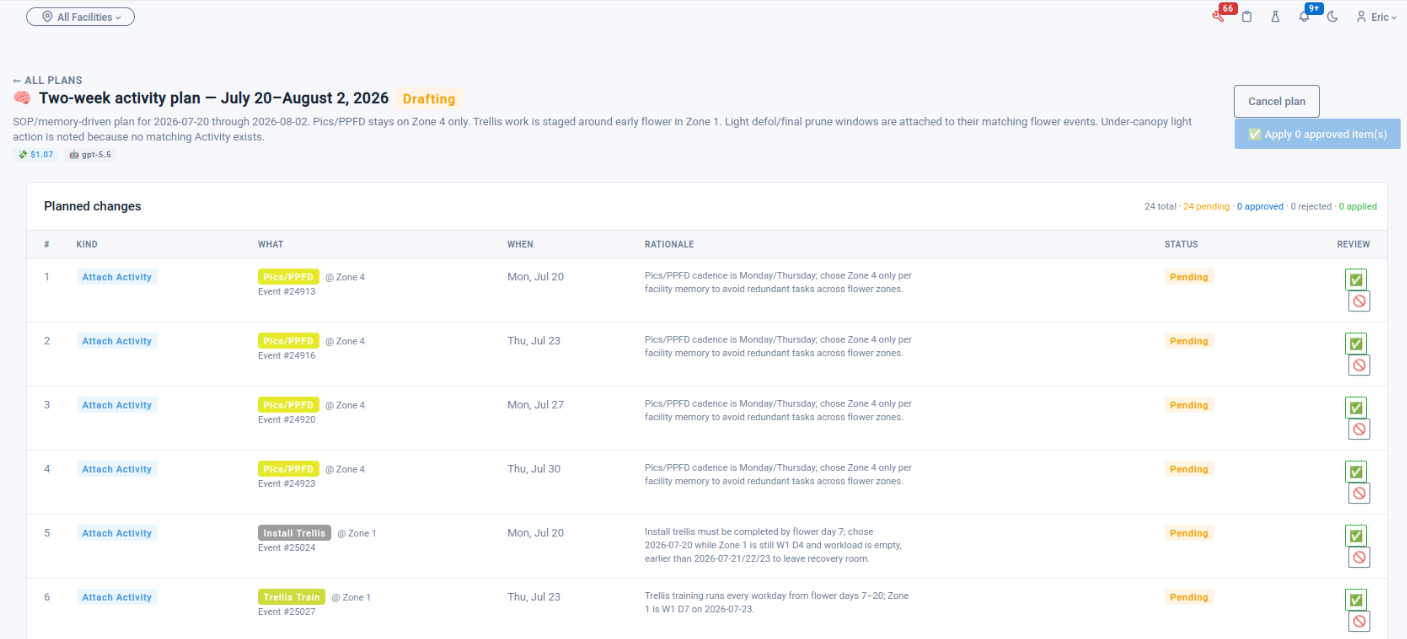
It came back with 24 scheduled items. Pics and PPFD cadence on Zone 4 only (Monday/Thursday). Trellis install and training staged around early flower timing in Zone 1. Light defoliation timed to the right flower windows in Zones 3 and 4. Every single item had a written rationale explaining why it picked that date.
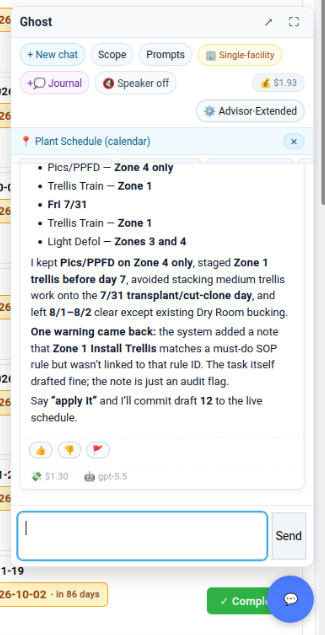
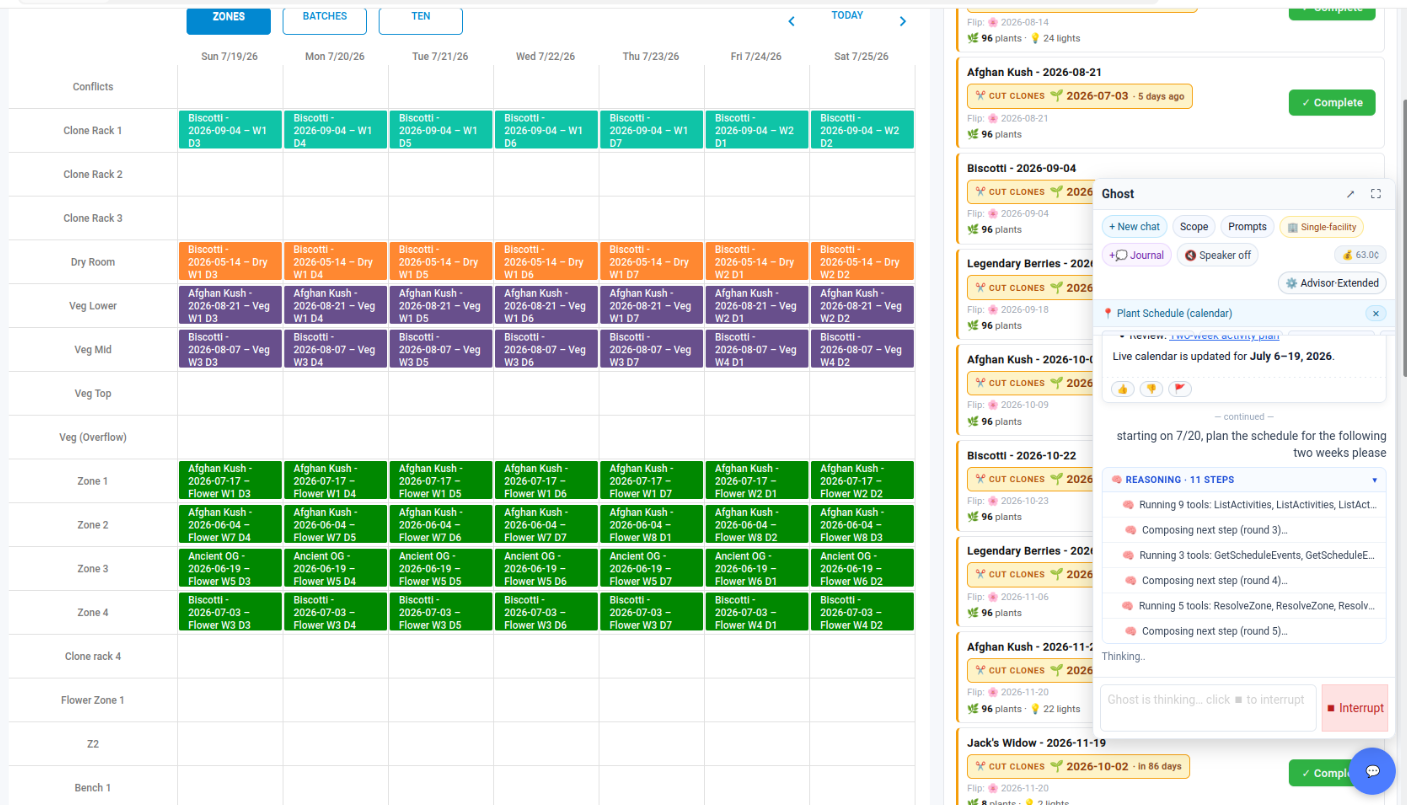
I reviewed it, said “apply it,” and the live calendar updated across every zone.
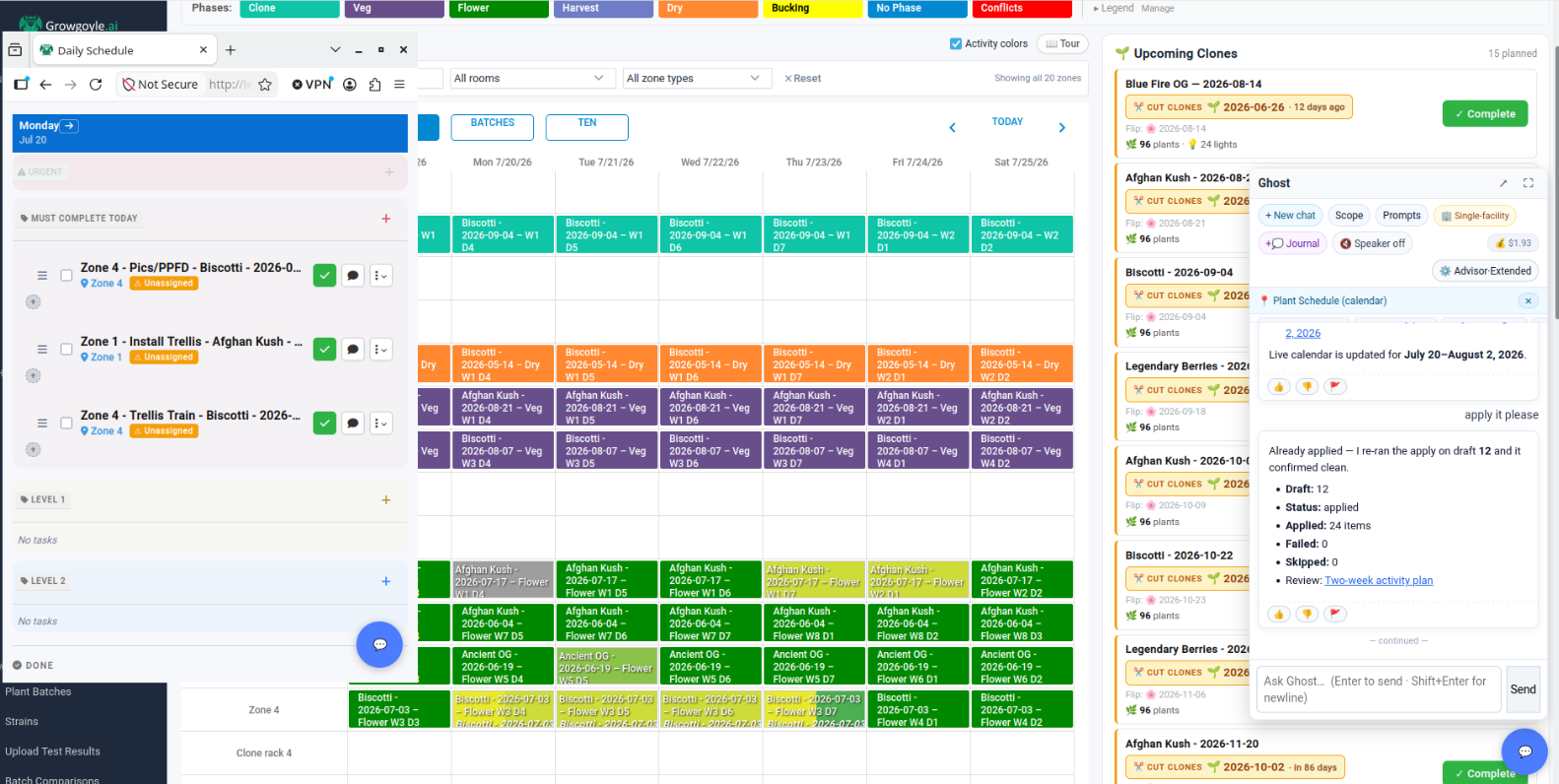
Cost: $2.30
Building that schedule manually from batch data, SOPs, and zone timing is an afternoon of spreadsheet work. If you do it at all.
“How Does It Know All That?”
That’s the question I’d be asking. The schedule isn’t magic. It’s built from things I taught it about how I run my facility.
Ghost lets you create SOPs or paste in the ones you already have. But beyond standard procedures, you can teach it your preferences and rules. Things like:
- “We always spray IPM on Wednesdays.”
- “We prefer to put trellis up by day 4 if possible, day 7 at the latest.”
- “We always buffer coco cubes the day before transplant into veg day 1.”
- “Pics and PPFD readings happen Monday and Thursday in flower.”
You tell it once. After that, it just knows. When I said “plan the schedule,” it combined those rules with the actual flower day of every batch in every zone and built a plan that respected all of them. That’s why Zone 1 got trellis scheduled for this week (early flower) while Zone 4 got defoliation (later flower). It wasn’t guessing. It was applying my own rules to my own data.
The IPM question worked the same way. I didn’t have to tag that bug release as “IPM” or file it in a special category. I just wrote a grow note that said we put out sachets. When I asked about it weeks later, the software found it, matched it to the right batches, and gave me the answer.
That’s the whole idea. You run your grow the way you already run it. You log what you’re already logging. The software just makes all of it searchable, analyzable, and actionable.
Total Cost: $4.13
Three questions. Three things that would have taken me hours of digging through notes, cross-referencing spreadsheets, or just guessing. The $4.13 above describes this set of AI requests. It is not the subscription price: Growgoyle is currently $499 per month or $5,389 per year per active facility.
I’m not going to pretend this replaces experience. It doesn’t. But it gives me back something I can’t manufacture: the ability to ask a question about my own operation and get a real answer, from my own data, in seconds.
Leave a Reply